2027 New Rule:Fake Modified Car Export BLOCKED
1. What the 2027 Filing Requirements Actually Tighten
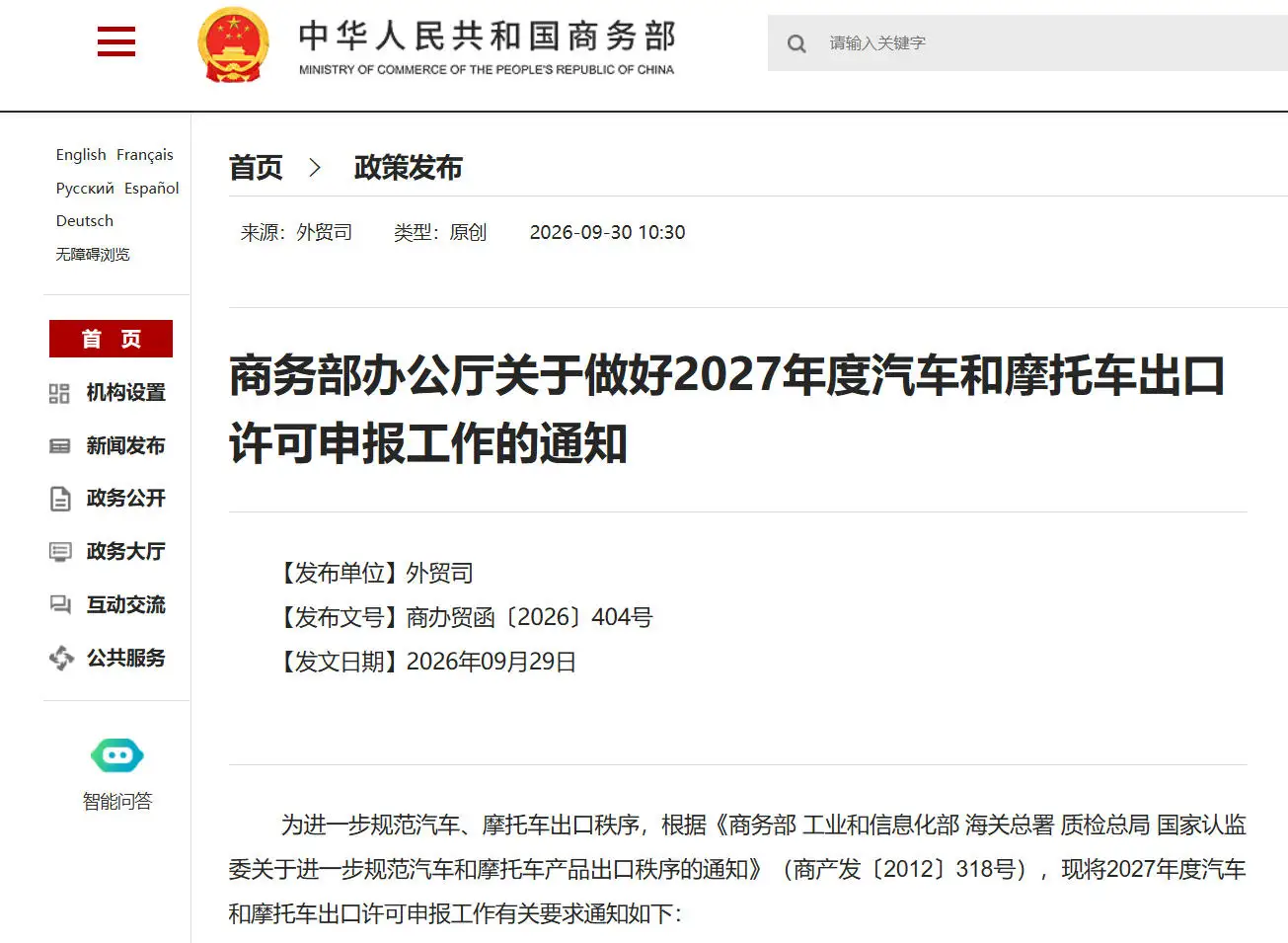
On 29 September 2026, China's General Office of the Ministry of Commerce issued the Notice on the Work of Accepting Applications for Automobile and Motorcycle Export Licences in 2027 (Official Document[2026] No. 404); hereafter “the Notice”). Among all the adjustments, the one that hits “modified export” most directly, and the one overseas buyers most need to understand, is the across-the-board tightening of after-sales service requirements.
1.1 After-sales service documentation raised to an unprecedented level
The Notice requires companies to upload three types of proof in the attachment section: proof of service-network cooperation, proof of network qualifications, and a description of repair-service capability. A Class I automobile manufacturer must provide information on at least 50 overseas service outlets. That alone raises the compliance bar.
But the real new element is the third item in the filing materials for modified-vehicle manufacturers: the Shared After-sales Service Confirmation Letter.
2. Why the Notice Names “Utility Vehicles, Patrol Vehicles, Coach Vehicles” Specifically
Why did the Notice single out those three names — “utility vehicle”, “patrol vehicle”, “coach vehicle”? Because these three categories are exactly where fake-modification export is most rampant.
2.1 These three categories are mostly “fake modifications”
Utility vehicles, patrol vehicles and coach vehicles each have their own legitimate specialised uses, but their chassis and bodies are often built on the same platform as passenger cars, which leaves plenty of room for cheap modification. In export circles, these three types are the worst offenders for “fake modification” — the so-called modification is often absurdly superficial: throw two screwdrivers and a wrench into the cabin and call it a “utility vehicle”; drop a walkie-talkie in the cabin and call it a “patrol vehicle”; add one extra rear-view mirror and a brake pedal on the front passenger side and call it a “coach vehicle”.
These vehicles were never meant to be real special-purpose vehicles. What they are after is the shell of a “special-purpose vehicle” — put a special-purpose name on it, and you can bypass passenger-car export qualification and ship out vehicles that never qualified as passenger cars.
2.2 How unqualified companies borrow the shell to export
Vehicle export is subject to qualification management; not just anyone can obtain an export licence. Some companies that originally had no vehicle-export qualification spotted this loophole: they do not build passenger cars and hold no passenger-car export qualification, yet they acquire or badge-engineer a special-purpose vehicle, apply a light modification, and then file it as a “modified vehicle” to export it as a passenger car. The Manufacturer is absent from this link — the vehicle is not exported under its authorisation, and it never promised after-sales. Once a quality problem occurs overseas, the brand, the buyer and the regulator cannot find anyone to hold accountable.
2.3 What the 2027 policy really does: shut out unqualified companies completely
Making the Shared After-sales Service Confirmation Letter a precondition for filing is like adding a lock at the export gate that only the Manufacturer can hold. A “modified passenger car” without the Manufacturer’s stamped endorsement cannot obtain export qualification.
Put plainly, this new policy looks on the surface like adding a threshold for modified vehicles, but in substance it clears out, right at the source, the companies that never had export qualification and only wanted to ride on fake modifications. For compliant exporters with Manufacturer authorisation, it actually opens up a cleaner market space.
3. A Closer Look at the Shared After-sales Service Confirmation Letter
3.1 Who must submit it
The Notice targets the situation of “filing for passenger-car export qualification with simply modified categories such as ‘utility vehicle’, ‘patrol vehicle’, ‘coach vehicle’”. Note two keywords: “simple modification” and “filing for passenger-car qualification”. In other words, this rule is aimed squarely at anyone who takes a vehicle that was not originally a passenger car, dresses it up as one with a token modification, and tries to obtain export qualification as a passenger car.
3.2 Three mandatory conditions
• The issuer must be the “pre-modification vehicle manufacturer” — that is, the Manufacturer — not the modifier itself.
• It must bear the official seal of that Manufacturer, in black and white, not a verbal promise.
3.3 One sentence to make it clear: who holds the switch
In the past, many modifiers could ship vehicles out by “I modified it, I file it myself”. That no longer works. As long as you are filing for passenger-car qualification and the vehicle originally belonged to a simple-modification category such as utility, patrol or coach vehicle, you must bring the Manufacturer into the process, and the Manufacturer must commit to after-sales in writing. Without the Manufacturer’s seal, the channel is blocked.
4. Why This Is a Root-and-Branch Strike on Modified Export
4.1 The right to export through the modification channel is returned to the Manufacturer
The Shared After-sales Service Confirmation Letter essentially hands the decision of “whether it can be exported” back from the modifier to the vehicle manufacturer . Whether the Manufacturer is willing to endorse after-sales for this batch of modified vehicles becomes a precondition for export.
For the Manufacturer, a batch of modified vehicles with unclear origin and vague purpose sold overseas damages its own brand if quality problems arise, so it has no incentive to stamp casually. The result: a large volume of modified export that relied on “borrowing a shell” to obtain passenger-car qualification loses its legitimacy at the source.
4.2 Two forms of the loophole now blocked
• Throw two screwdrivers into the cabin and call it a “utility vehicle”, drop a walkie-talkie and call it a “patrol vehicle”, add a mirror and brake pedal on the front passenger side and call it a “coach vehicle” — then file it for export as a passenger car.
• Repeatedly fit different “special devices” onto the same chassis to dodge the technical and certification requirements for passenger cars.
These tricks are not new. At the end of 2025, four ministries — the Ministry of Commerce, the Ministry of Industry and Information Technology, the Ministry of Public Security and the General Administration of Customs — jointly issued the Notice on Further Strengthening the Management of Used-Car Export, closing one gate first: for new vehicles registered less than 180 days, the manufacturer must issue an After-sales Service Confirmation Letter, and zero-kilometre used-car export was tightly controlled (link at the end). The 2027 Notice now welds shut the “modified-shell” gap as well (link at the end).
4.3 The “modified export channel” you fancy will not survive 2027
Many overseas importers have been relying on a “cheap and fast” modified-export channel that runs entirely on their supplier’s edge-play. The 2027 policy makes the Shared After-sales Service Confirmation Letter a hard threshold; without the Manufacturer’s seal the channel simply dies, and the suppliers who lived on fake modifications and shell-borrowing filings will be cleared out in this round.
Running an import business is about the long term — stability and predictability. If you stake the business on an edge-play channel that can disappear at any moment, once the supplier drops out your whole chain — procurement, spare parts, warranty — breaks with it, and the small price difference you saved up front cannot begin to cover the loss of a standstill.
The only safe route that lasts is to work with a compliant, stable exporter holding an Manufacturer-authorised export channel. With solid qualifications, Manufacturer-backed after-sales and immunity from policy shocks, a company can build its import business into a long-term, stable undertaking.
5. A Reminder for Overseas Customers: Choose a Compliant Exporter
5.1 The difference between two export channels
Do not judge a vehicle by price alone. The legality of the channel decides whether the vehicle can be landed in the destination country and whether anyone services it when it breaks.
| Comparison | Modified / shell-borrowing channel | Manufacturer-authorised channel |
|---|---|---|
| Source of qualification | Bypasses passenger-car qualification through simple modification | Formal export authorisation from the vehicle manufacturer |
| Vehicle identity | Fake Modified to utility / patrol / coach vehicle | Real brand, real model |
| Policy risk | Already blocked by the new rules | Safety and Compliance; Long-term and stable. |
6. SudiAuto: A Compliant Exporter with an BYD-Authorised Export Channel
Our compliance foundation
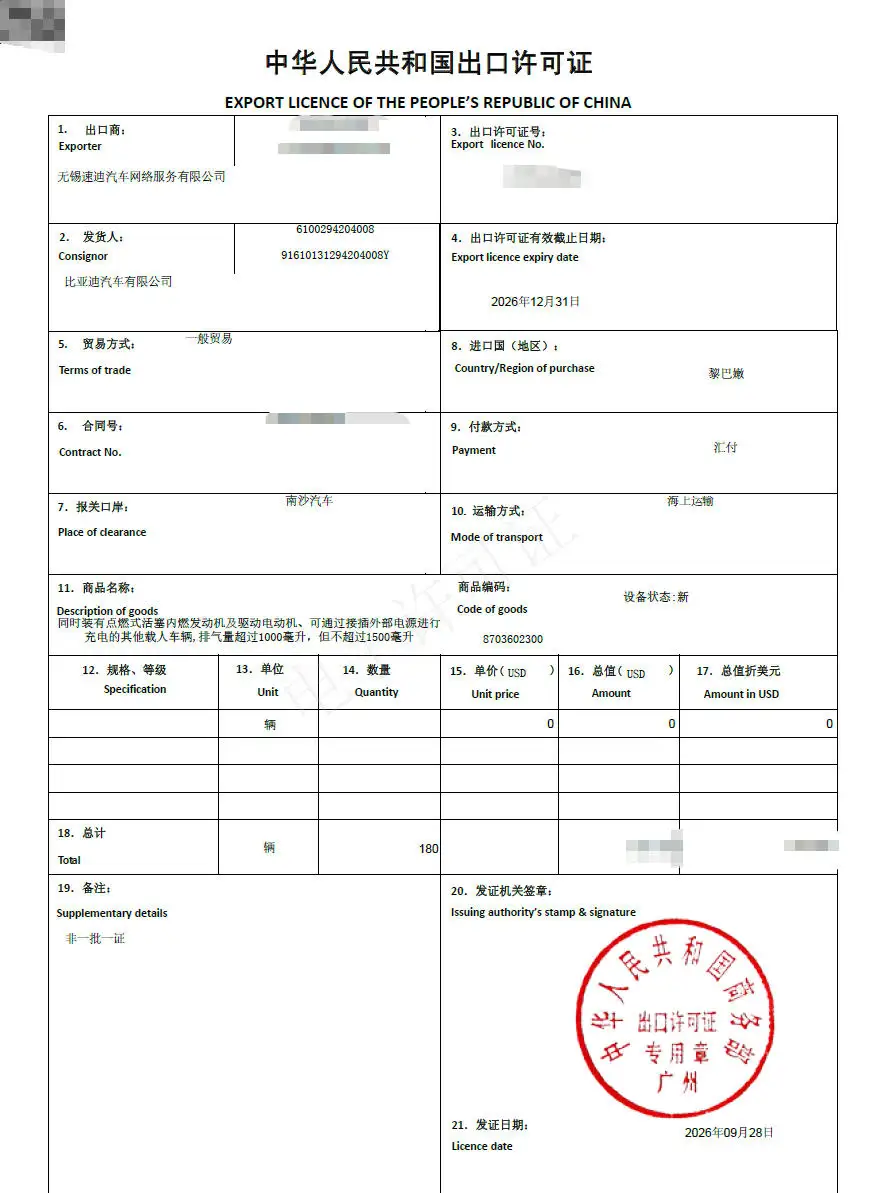
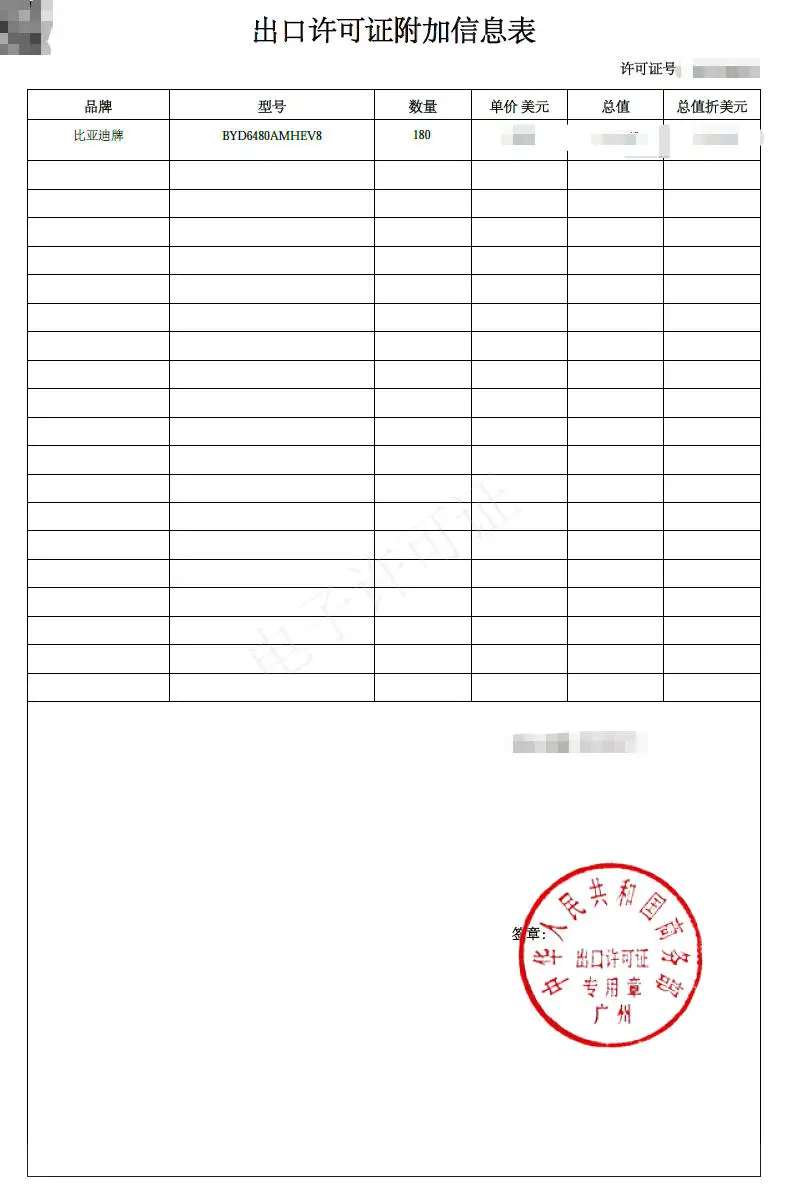
SudiAuto holds an automobile export licence issued by the Ministry of Commerce, and operates multiple BYD-authorised 4S dealerships in China, so the source of every vehicle and its export qualification are fully traceable. We export the BYD, DENZA and LINGHUI brands, and every vehicle we export goes through the Manufacturer-authorised channel — there is no “shell-borrowing” or “fake-modification” edge-play.
7. In Closing
The direction of policy is already clear: the compliance threshold for vehicle export will only keep rising, and the room to take shortcuts through edge-play is being sealed off bit by bit. For overseas buyers, choosing a compliant exporter with an Manufacturer-authorised export channel is like taking out insurance on the whole transaction — worth far more than the small price difference saved.
SudiAuto has exported more than 1,000 vehicles, with export value of USD 23 million, across more than 10 countries. If you are evaluating Chinese electric-vehicle procurement, contact us to settle the compliance question first, before discussing price.
8. Frequently Asked Questions
Q1: What is the Shared After-sales Service Confirmation Letter?
A: It is a document required in the 2027 export-licence filing for the case of “filing for passenger-car qualification with simply modified categories”. It must be issued and sealed by the pre-modification Manufacturer, and it commits to providing repair technology and spare-parts support for the exported vehicles and assisting in resolving overseas quality and after-sales issues.
Q2: I am buying a normal passenger car. Will I be affected?
A: Export of genuine passenger cars through proper channels is not affected. What is affected is the practice of lightly modifying a utility, patrol or coach vehicle and passing it off as a passenger car to obtain qualification.
Q3: Does this mean modified vehicles can no longer be exported at all?
A: Modified vehicles can still be exported, but they must be filed under the “modified-vehicle manufacturer” category and can no longer borrow a shell to obtain passenger-car qualification. There are no new restrictions on genuinely modified special-purpose vehicles (for example ambulances, aerial-work vehicles and the like).
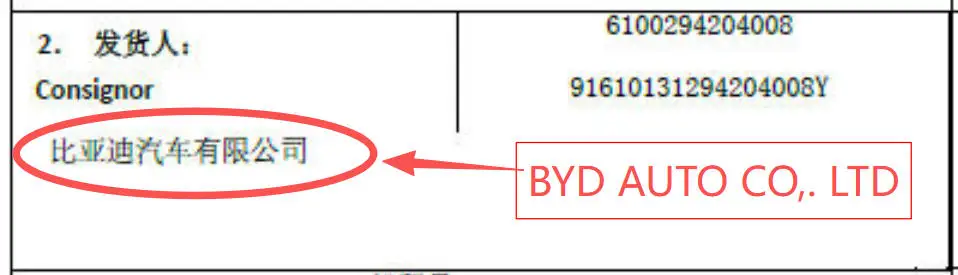
Q4: How do I confirm an exporter is “authorised”?
A: Check that the company name printed on the export licence is that of the automobile Manufacturer.
Q5: When does this policy take effect?
A: The Notice carries the document number Shang Ban Mao Han [2026] No. 404 and is dated 29 September 2026; the modified-vehicle requirements take effect immediately.
9. Sources
General Office of the Ministry of Commerce, Notice on the Work of Accepting Applications for Automobile and Motorcycle Export Licences in 2027 (Official Document[2026] No. 404): https://www.mofcom.gov.cn/zcfb/zc/art/2026/art_c7ac10d2deaa489dbf6346461785c65c.html
FAQ
Q.Why should I buy from you not from other suppliers?
We are not the cheapest. But we are the kind of company that will still be here even 10 years after you sell the car. — Our group founder & chairman entered the automotive industry in 1985, making him one of China's first auto traders, with over 40 years of experience. All our inventory photos are real shots, not copied from the internet — a reflection of our group's commitment to honest trading.
Q.Who are you?
We are WUXI SUDI AUTOMOBILE NETWORK SERVICE CO., LTD., based in Wuxi City, Jiangsu Province, China, starting from 2024, as a vehicle export team of the Meidi Auto Group. In 2025, we exported over 1,000 vehicles with a trade volume of USD 23 million, serving customers across four continents.
Q.How can you guarantee quality?
Always Inspection before shipment. We can conduct vehicle inspections by a third party based on the customer's requirements and issue a reliable report. Our partners include institutions such as APT and Dr. Cha.
Q.Do you have the products in stock?
Yes, our current inventory cars are displayed on the website. You can browse at any time. Large quantities must be produced according to orders, and small quantities can be consulted with our sales team.
Q.What can I buy from you?
All vehicle models of BYD brand, covering Dynasty, Ocean, Linghui, Commercial and many other series. We are the largest BYD dealer in Wuxi City, occupying 90% of Wuxi City market. We cooperate directly with BYD factory in China.
Q.Can I mix different models in one container?
Yes, different models can be mixed in one container.
Q.What's your warranty term?
We offer different warranty periods for different products. Please contact us for detailed warranty terms.
Q.Will you deliver the right goods as ordered? How can I trust you?
Yes, we will. The core of our company culture is honesty and credit. We are a verified supplier by V-trust since 2024.
Q.What is your payment?
Payment Currency: USD, HKD, CNY. Payment Type: T/T.
Q.What is your shipping terms?
Delivery Terms: EXW, FCA, FOB, CFR, CIF.
Q.What services can you provide?
Customer visit or car inspection full reception service, product samples or accessory services, etc.
Q.Do you offer right-hand drive (RHD) versions? (Factory Wholesale)
We offer separate LHD (left-hand drive) and RHD (right-hand drive) model lines. Please state your target country when you contact us.
Q.Is the MOQ really 100 units? (Factory Wholesale)
In-stock units have no MOQ — a single unit can be ordered. Made-to-order vehicles start at 100 units, and multiple models can be combined to reach 100.
Q.What are the payment terms for custom orders? (Factory Wholesale)
Typically T/T: 40% deposit + 60% balance. Letters of credit (L/C) require separate negotiation — please contact us.
Q.How long is the lead time? (Factory Wholesale)
For every 100 units, factory production is estimated at 45–90 days, depending on the factory's production schedule and parts supply.
Q.How about export compliance and certification? (Factory Wholesale)
Export customs declaration on the Chinese side is handled by the BYD factory — no action required from the buyer. We can assist with ocean freight booking and documentation. Destination-market homologation is the buyer's responsibility; we provide the required technical documents.